Inside WC ticket price issue, expert weighs in on FIFA’s next move
The 2026 World Cup is the most expensive ever, but a ticket expert thinks FIFA has a chance to change the narrative - even if they have got it wrong
Posted Friday, April 24, 2026 by goal

FIFA Ticket Sales story
The 2026 World Cup is the most expensive ever - and with tickets going unsold, one expert explains where FIFA got it wrong and how it can fix it
Jim McCarthy does tickets for a living.
Alright, it's not quite that simple, but the Los Angeles-based consultant, who advises football clubs on their ticket pricing and events strategies, knows a fair price when he sees one. And when he looks at the World Cup, like so many others, he is mightily skeptical.
And for good reason. This thing is expensive. There are widespread reports of tickets not being sold, of fans being priced out. But McCarthy, who has been involved in events management for over 20 years, believes that FIFA got it wrong from the start.
"Let's say you want to maximize the revenue of an event. The game is to find that absolutely optimal price point where the demand and the supply meet. That's the best you can do. Because if you go past that, then people begin to drop out of the market," he explains to GOAL.
But there's more to this than simply supply and demand. McCarthy claims that it's not just the desire for tickets, but the willingness to pay at a certain price point that FIFA has miscalculated. The response, in most cases, is for organizations to simply lower their prices in order to satisfy inventory - that is the very definition of dynamic pricing. That would be a simple fix.
"They shouldn't be afraid to be dynamic in their pricing on the downside. Because very few people get pricing completely correct the first time," McCarthy argues.
In fact, you're allowed to get pricing wrong - as long as you correct things.
"But there's a whole bunch of ways that you could take a small amount of inventory to a discrete audience, and see what they do in response to that. And if you get it a little wrong, it's not that bad because you can adjust," he says.
Yet FIFA seems reluctant. The World Cup, after all, is a premium event. There will always be buyers somewhere. And they have maintained the majority of funds will be distributed towards improving the game around the world. But getting the right people in the doors - the genuine fans who have been saving up for this kind of thing - has been a challenge. Tickets are too expensive. McCarthy is not part of the decision-making process. However, he can see where some adjustments need to be made. The good news is that this thing might just be fixable, PR disaster or otherwise.
GOAL talked to the ticket expert about some of the biggest problems around pricing, demand, and the optics of it all...
NOTE: This interview has been lightly edited for brevity and clarity.
FBL-WC-2027-WOMEN-LAUNCH
ON WHY WORLD CUP TICKETS ARE SO EXPENSIVE
GOAL: Jim, to take it from the top, why are World Cup tickets too expensive?
MCCARTHY: Because FIFA, who sets the prices for the World Cup, made a decision at some point that there was a gigantic opportunity to make a lot of money from tickets in this particular World Cup. And that's in part because in the United States, tickets for sports events can be quite expensive on a regular basis. It's worth saying in the United States that there are many, many opportunities to go to sports events for very affordable prices, alongside those expensive events. So it is a very big and very complex live events marketplace with every price point.
So I think that the prices got set because, even more than in Qatar and in previous World Cups, the organizers saw an opportunity to position this as a premium event that had extremely high demand in a market where they know prices are significantly higher in many cases than in Europe and other places around the world. And so that was the decision that was very clearly made.
GOAL: So is that exploitative or logical?
MCCARTHY: You know what I always say about tickets, and have said for forever, is "no one needs a ticket." When people feel pain about having to pay more for gasoline or petrol, it's because you sort of have to pay for it, and so there's an element of resentment there. Typically, with a live event ticket, it is very easy to say "no." So when any event organizer prices something too high, it isn't necessarily a smart move, because people can walk away.
It's really worth sticking a pin in the fact that this is a very, very high-demand event. But let's say you want to maximize the revenue of an event, the game is to find that absolutely optimal price point where the demand and the supply meet. That's the best you can do. Because if you go past that, then people begin to drop out of the market. If I say to you, look, there's some match that you really, really want to see, and I say, "Will you pay $100?" It's a yes, "will you pay $200?" It's a yes. "Will you pay $300?". And at some point, you say, "no." So if I set my starting price at a point where your answer is, "no", it's not smart. The game is to match the prices with the levels of demand.
Now, have they gotten this right? I think over the overall texture of the event, they have in many places, I think that the prices in the finals and semifinals are probably the round of eight will stick, and they're very high, just because of the sheer amount of demand for this event. But I think in a lot of other matches, it does not appear as though those are matching - the prices and the demand level. It's easy to say no.
The one thing that I would, I would say FIFA should have done differently is experiment more to find the true demand level for tickets. You know, experiment with small releases of tickets to small, discrete groups, find out what the demand level really was, and then build their price table around that, as opposed to what they did, which was start with actually quite aggressive prices across the board, and then very publicly, in relatively large numbers, basically laying all the cards on the table and saying, "Here's how expensive all these games are going to be." And then they learned what the demand level was for many of these games from an event pricing strategy point of view. That's not the way to do it, unless you are very confident.
Lionel Messi Argentina
ON IF PRICES WILL GO DOWN
GOAL: Do we then believe that prices will have to come down over time? If the whole point of dynamic pricing, right, which everyone hears all time, is that prices can change, does that mean that in a month we could be able to buy a ticket for opening night for 90 bucks?
MCCARTHY: If anyone from FIFA is reading this, don't be afraid of adjusting, because I believe they will need to adjust to get this tournament sold the way they want it to be sold.
There are a lot of things that you can see from outside the tent, what's happening in the secondary market, and everything else. I think there are still a few million tickets that need to be sold, and we know where those unsold tickets are clustering. People talk about supply and demand, but the level of interest in the tournament is extremely high, and that's demand. But what really matters is what economists say is "demand at this price." Demand varies by price, the quantity demanded, to be technical. More simply, what is the number of tickets that people want to buy at a given price? They shouldn't be afraid to be dynamic in their pricing on the downside. Because very few people get pricing completely correct the first time. The people who end up being, you know, successful in terms of managing their yield.
The best are the ones that accept the feedback from the market and adjust.
FBL-WC-2026-MEX-TICKETS-FANS
ON HOW THIS COULD HAVE BEEN AVOIDED
GOAL: So how could we have avoided this in the first place? You kind of proposed a little bit of a solution in that with smaller quantities, maybe lower price points, that kind of thing is that, is that the key, the silver bullet?
MCCARTHY: You don't have to release all your inventory. You don't have to lay all your cards on the table for the whole world to see. Only people who get access. It'll leak a little bit beyond that. But there's a whole bunch of ways that you could take a small amount of inventory to a discrete audience, and see what they do in response to that. And if you get it a little wrong, it's not that bad because you can adjust.
On the other hand, if you put out a price point and they sell, then you think, "there might be some more leeway in here." You know what I mean? There may be some people willing to pay a little bit more. That's what's known as dynamic pricing. Usually dynamic pricing is thought of as, "just raise the price." I don't even use the term dynamic pricing anymore, because it's sort of tainted for me.
FBL-WC-CLUB-2025-MATCH63-CHELSEA-PSG
ON THE REACTION TO FIFA
GOAL: Doesn't it make FIFA look bad if they change the prices, though?
MCCARTHY: I think they're fearful of that. If you go back wind this back a few steps, they could have been more discreet about discovering where the market really was, and then their prices, when they were more public would have been closer to the mark. So then you don't have to make big swings. What you really want to avoid is very late, very big swings.
GOAL: And that could happen, right?
MCCARTHY: There's still time. The thing that's really surprising is that we sort of had a dry run of this exercise last year with the Club World Cup. I went to a completely sold-out Rose Bowl. There were some very well sold events, but on the other hand, I understand that there were some matches that had dramatic price drops very late in the game, which is too late to make a difference, because people need planning, and they need whatever. So on the heels of this just happened, it's kind of even a little more surprising. I don't know. It's frustrating.
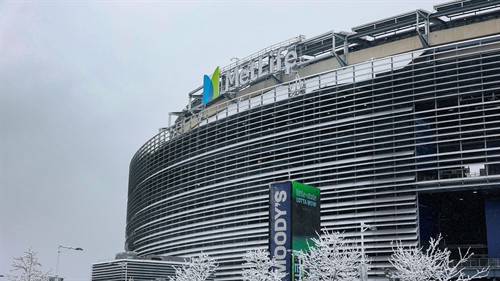
Washington Commanders v New York Giants - NFL 2025
ON THE WORLD CUP FINAL
GOAL: Isn't there a sense that this was always going to happen? FIFA will say that people will be mad no matter what they do...
MCCARTHY: If the story was, oh my god, there are $20,000 tickets for the final, then everybody who knows the industry would go like, "yeah, of course."
Of course, some of the tickets are going to be $20,000 or more. As a ticketing professional or an event organizer, you can shrug that off. But the unfortunate thing is, this is the only thing people are talking about with the World Cup. It isn't necessary. I say this all the time. When the market demand is there, it's not wrong for organizers to ask for a lot of money for tickets...I also don't think it's usually the optimal strategy to maximize your revenue from an event. The finals and the semifinals, those are probably revenue maximization opportunities.
The group stage definitely isn't, and part of that is that organizations have goals that go beyond what's happening today in terms of match revenue. For example, clubs also have obligations, or should have obligations, or place value on community accessibility, because the club is woven into the fabric of the community. So there are a lot of reasons why, in most circumstances, maximizing revenue is not actually the optimal strategy.
But listen, there's going to be one and a half billion people watching the game on TV who wish they were in the stadium, and that's a big number compared to the 60,000 or 65,000 capacity in the stadium. The group stage games, especially this year, where there are so many, are a great opportunity to get a lot of people their first experience sitting in a World Cup match and feeling good about it.
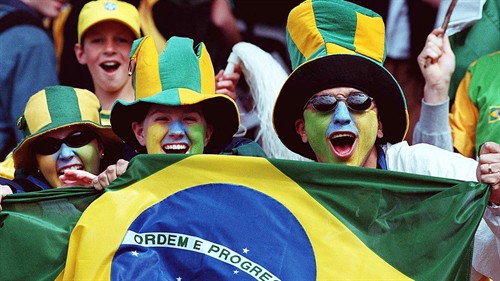
SOCCER-U17-WORLD CUP-FANS
ON THE SECONDARY MARKET
GOAL: On the secondary market, what can we actually learn from this? Because everyone's just like, "ah, big, scary numbers!" But what does that mean?
MCCARTHY: In the U.S., inventory moves straight into the secondary market in many cases. And part of the reason for that is actually a good reason, and that is that that's how you get tickets sold through people. The other thing is that the secondary market and all the people around it work their tails off to get tickets sold. If somebody has an investment in tickets that go into the secondary market, they are extremely motivated to find the right price for those tickets, and get them sold. There's nothing magical about the secondary market that means people will pay more than they want to play. What the secondary market has done, in many cases, is reveal the real demand level for tickets, not just in the World Cup, but across the board.
FIFA World Cup 2026 Venues - Dallas Stadium
ON THE BEST CASE SCENARIO
GOAL: So what can save this thing? What is the best case scenario between now and June 13?
MCCARTHY: FIFA takes a candid look, an open-minded look at where the demand is and adjusts pricing accordingly, like tomorrow, because people need a planning window. People need selling windows. If you are trying to sell these tickets, it takes time, and if you're planning to go, it takes time. So we're kind of running low on time at this point, so it needs to happen soon. But all they really have to do is get very candid and concrete about where the demand isn't at the price points that are advertised and adjust.
The World Cup is really, arguably, the world's biggest "I just want to be there" event. And so giving people the opportunity to be there, especially considering the expansion of the field and the changes to the group stage, it's a giant opportunity for them to let literally millions of people have an experience of coming to the World Cup and just feeling fantastic about it.
-
World Cup

- Daily
- Weekly
- Monthly
Photos
More»
Hot pics of stunning model Lindi Nunziato
Tuesday June 09 2026
Meet world's sexiest hocky star Mikayla Demaiter
Tuesday June 09 2026
[PICTURE SPECIAL] France 3-1 Northern Ireland
Tuesday June 09 2026
Your Say