‘It was one world’ - How an imperfect World Cup united fans
The 2026 World Cup had plenty of flaws, but its lasting legacy may be found in the streets, bars and stadiums where cultures converged and unexpected connections were formed.
Posted Wednesday, July 22, 2026 by goal
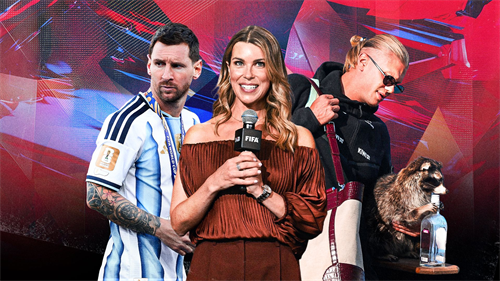
2026 World Cup wins GFX
The 2026 World Cup had plenty of flaws, but its lasting legacy may be found in the streets, bars and stadiums where cultures converged and unexpected connections were formed.
The fans in the Boston coffee shop, by every metric, looked pretty English. Their unmistakable accents and Three Lions tattoos were easy giveaways. And if that wasn’t enough, one of them was wearing an England tracksuit.
There were context clues, too: later that day, England were due to play Ghana at Boston Stadium. This was matchday, and the duo was stopping in for a morning coffee - no doubt in preparation for a glut of beer.
They were approached by an affable woman, walking her dog. In the politest but most distinctly Boston voice possible, she remarked to the two men:
“We’ve loved having you Scots in Boston these past two weeks!”
The English fans laughed it off, thanked the lady, talked for a while, and walked down the street towards Boston’s South Station. Never mind the good-natured mistaken identity; there was a game to worry about. It was an amusing scene, but one that encapsulated the vibe of this summer. Englishmen were mistaken for Scots. This is usually a sin, a point of argument, the point at which things escalate.
But in North America, it was a silly moment that had a broader point. It didn’t matter that these two guys sounded like they had just walked out of a chippy in East London. Nor did it really matter that the good-natured lady thought they were Scottish. That instance, where one person got it wrong, and everyone had a laugh, was emblematic of a summer in which the world was, momentarily, united.
"The whole tournament was spectacular, in every respect. You had a lot of enthusiasm. You had a lot of really fabulous matches. You had all the worry beforehand that all these new countries coming in would make a mockery of it. Well, they really held their own, with just one or two exceptions, and so that made it exciting,” Alan Rothenberg, former president of U.S. Soccer, told GOAL.
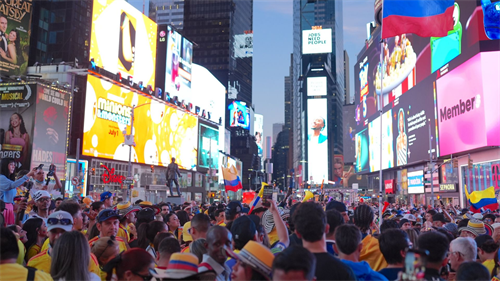
Colombia fans Times Square
'It's the people in the streets'
World Cups are reflections of the country and society in which they take place. They offer deeper looks into the rights and wrongs of a nation or area. Yes, this is a tournament in which 48 teams participated.
But it was also a lens through which the rest of the world judged North America. And as they peered through that microscope this summer, almost begging for faults, the standout image was that of a place, for six weeks, brought together by soccer.
The numbers look good. Record viewership on television. Nearly seven million attendees in person. Stadiums, on average, reached 99.7 percent capacity. But perhaps more significant was the harmony of it all.
“It's the people in the streets and the people in the various bars and restaurants at the watch parties at the fan festivals, and they intermingling with people from all over the world. It really was one nation. It was one world,” Rothenberg said.
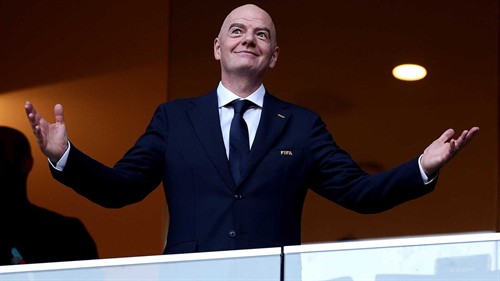
Gianni Infantino
'The time of their life'
Really, this thing is best captured in a series of snapshots from cities around North America. But it’s worth mentioning that expectations heading into the tournament were high. The United States, one of three host nations but home to the vast majority of the games, loves its big events. And FIFA President Gianni Infantino banged that drum expertly, dubbing this the summer of ‘104 Super Bowls.’ It seemed a bit brash, a bit American.
He didn’t quite get his wish. Not every game had the pomp and circumstance of a Super Bowl. Instead, he happened on something that maybe he didn’t expect: America, briefly at least, started to like each other again. The world enjoyed it, too.
“A lot of the international visitors who came, and you know, were a little apprehensive of what it would be like. And I think everybody came away just having the time of their life,” Rothenberg said. “It really showed what the beauty of sport is, which is it really can drive community.”
There were plenty of moments that encapsulated it all. But it perhaps started on social media. An anonymous German soccer fan, who went by freddyLA7 on X, started posting about his American journey with two companions.
He arrived in the U.S. just before the World Cup, and started gaining traction on social media for his fascination with American classics. He lauded Waffle House. He had the time of his life at Buc-ee's (see below). He wasn’t alone. Other fans explained their fascination with ranch dressing or bottomless tortilla chips at Mexican restaurants.
“I loved all of it. I do feel like we're all seeing all the fans from around the world come to America, fall in love with America, bring the ranch dressing. We've all seen every one of those memes, but that is a beautiful thing,” Fox Sports analyst Jenny Taft said.
imago-sport-1079221643.jpg
'Texting me pictures of Erling Haaland'
It was the fanbases, too. Part of the appeal of a World Cup is that it is, in effect, the most authentic expression of the silly whims of a country. This is de facto permission, of sorts, to be a bit too much. It’s also a good excuse to bring the purest form of a nation’s culture to places that it would never normally exist.
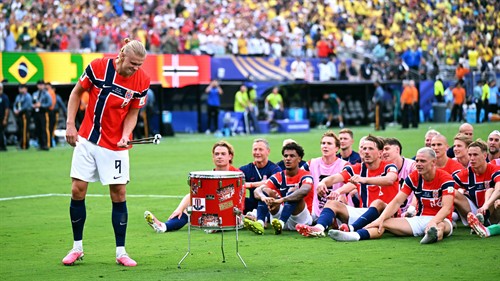
And so we come to the concept of Erling Haaland. The Norwegian striker is six-foot-four, a walking goal machine, and living nightmare for defenders. He is also a goofy child who, it seems, loves to have fun. He was the symbol of Norway’s unexpected quarterfinal run this summer, not only in goals but also in spirit.
He led the “Viking Row” at New York/New Jersey Stadium after scoring twice to beat Brazil in the round of 16. He promoted smoked fish in Times Square. He also scored seven goals. America fell in love with him a bit.
“I loved my friends who have never watched soccer texting me pictures of Erling Haaland. I loved all of it,” Taft said.
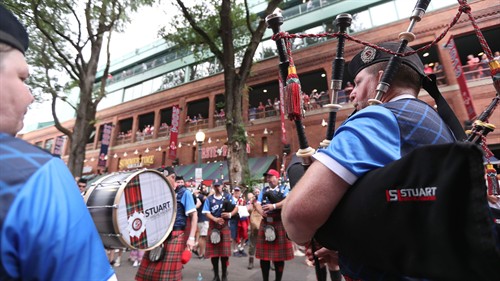
The same goes for Scotland’s Tartan Army. They had their moments at various points, famously drinking Boston dry - something that even the city’s large Irish population has not managed. They also brought football songs to Fenway Park, serenading John McGinn in the echoey concourse of the famous stadium.
It wasn’t just those two, either. England fans sold out rodeos wearing Three Lions cowboy hats. The Dutch “marches to the match” were ubiquitous. Argentina fans chanted so loud that stadiums literally shook.
Haiti fans
'Yo, I'm rooting for you guys today'
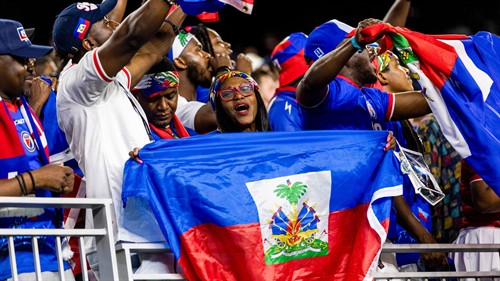
Gerald Jean was standing on a street corner in Philadelphia, handing out Haitian flags. To the passerby, he was a friendly man in his early 60s, drumming up support for the World Cup. Haiti were due to play Brazil later that day, in one of the most overt mismatches of a 48-team tournament.
This was no ordinary man promoting the fixture, though. Jean, an unassuming character in his elder years, was quite a good footballer in his day, and played for the Haitian National Team from 1974 to 1978. He shared the pitch with legends such as Carlos Alberto, Pele and Rivellino. He is, in effect, etched into the footballing fabric of his nation.
And there he was, hanging out on a street corner, wearing a Haiti hat.
The Haitian community of Philadelphia had rallied together to print 19,000 flags, and placed former national team players on various street corners around the city. There were block parties and rara parades planned throughout the day. And despite losing heavily in front of a rampant Brazil, their fans never stopped chanting.
Such was the case for countless diaspora communities in the U.S. this tournament. The beautiful thing about America is that people from every corner of the Earth live in this country, often in little pockets few know about. It led to some real notoriety for nations this place otherwise ignores. Cape Verde, the second smallest nation to qualify for the World Cup, has significant enclaves in Massachusetts, New York and Central Florida. They were some of the liveliest supporters of the whole thing.
“It was insane, the feeling, marching, seeing all the fans from different countries, seeing our jersey and hearing, 'Yo, I'm rooting for you guys today,'" Marvin Resende, who lives in New York, told GOAL.
And even if prohibitively high ticket prices made attending games tricky, the action at watch parties and bars across the country was more than enough.
“It just got us into a party mood,” Rothenberg said.
Scotland fans Fenway
'Partake in the baseball experience'
Other sports had their moments, too. Baseball isn’t only played in America. But it feels distinctly American: the pageantry, the noise, the hot dogs, the seventh-inning stretch. There’s a real charm to the sport.
And fans flocked to games all summer.
“We hosted the Tartan Army down here. And that, to me, was one of the most incredible experiences in my career, because to see to go down there and see the sea of people that are coming into this building all so excited to partake in the baseball experience - a lot of them had no clue what was going on during the game,” Alex Parker, Chief Brand Officer for the Miami Marlins, said.
For those who traveled, getting an authentic American experience was just part of the appeal.
“You get families, you get groups of people, groups of friends meeting after work and going, and it's a nice atmosphere and sort of laid-back vibe, until the game gets going a bit. But it’s terrific as a sport,” Paul Godfrey, an England fan who attended a handful of baseball games this summer, told GOAL.
Fans on train
'The global hub of the sport'
Piece it all together, and this was a summer where the world felt a little bit more connected. There were, admittedly, plenty of bad things here. Tickets were too expensive. President Donald Trump’s intervention in FIFA’s decision to lift Folarin Balogun’s red-card ban soured the USMNT’s run. The fact that Iran had to have their base camp moved to Mexico due to an armed conflict with the U.S. will not live well in the memory.
Those things are issues that will not be forgotten. But neither will Lamine Yamal shopping at Walmart, or Haaland with a taxidermy raccoon getting off a plane in Norway. There was a real buzz about soccer, too.
“The fact that we've pulled the amount of Americans that have watched this and engaged with this tournament is remarkable. It's incredible… this has been a wonderful celebration of the very hard work a lot of people have put in for decades to build the sport in this country,” FOX announcer John Strong said.
Cities made money, welcomed new people, and, in some places, might have changed long-term for the better.
“The tournament attracted visitors, supported local businesses and strengthened Toronto’s profile as a tourism destination. The City’s mobility plan also worked, with more people walking and cycling and citywide traffic remaining generally consistent with pre-tournament levels,” a spokesperson for Toronto’s host committee said in a statement.
And ultimately, after this chaotic but quite wonderful month, one thing became clear:
“I mean, the United States has become, in so many ways, the global hub of the sport,” Strong said.
That sounds an awful lot like a mission accomplished.

- Daily
- Weekly
- Monthly
Photos
More»

Arsenal's World Cup minutes give Arteta injury headache
Wednesday July 22 2026
Your Say