The Water Minutes That Turned the Tables.. What Did the Cooling Breaks Do at the World Cup?
A detailed analysis of World Cup data has shown that the breaks during the two halves of matches, known as "cooling breaks" and lasting three minutes, which were originally introduced as a health measure to protect players amid temperatures exceeding 30 degrees Celsius, turned into a tactical "time-out&q
Posted Tuesday, July 21, 2026 by goal
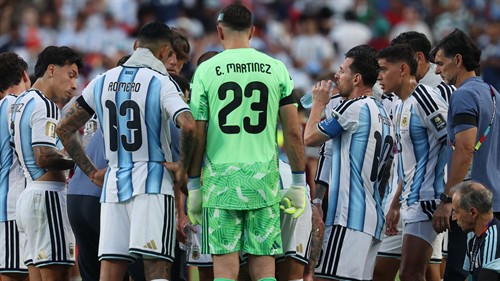
FBL-WC-2026-MATCH100-ARG-SUI
Shocking Figures on Cooling Breaks at the World Cup
A precise analysis of World Cup data has shown that the stoppages during the halves of matches, known as "cooling breaks" and lasting for 3 minutes, turned into a tactical "time-out" that coaches exploited to their advantage. Originally introduced as a health measure to protect players amid temperatures exceeding 30 degrees Celsius, they became something else entirely.
To assess the actual impact of these three minutes, the "expected threat" data from the Driblab network was analysed across all 104 matches of the tournament. That covered 208 cooling breaks and allowed a comparison of teams' performance before and after each stoppage.
Spanish newspaper "Marca" reviewed figures that contradict the common belief that these breaks throw a lifeline to the struggling team. The most recurring effect in the tournament, at a rate exceeding a third, was reinforcing the control of the team that was already dominant before the stoppage.
In 73 cases, the more fortunate team emerged from the break at the same level or in an even more superior position. Reactions from the teams being dominated did not exceed 16%, and cases of a complete turnaround in the course of the match did not exceed just 6%.
One important exception emerged, relating to cases in which the dominance had peaked before the stoppage. In 15% of cases the break worked to smother that momentum and calm the tempo of the match.
The most intriguing relationship between the stoppage and scoring appears in the five minutes that followed the cooling breaks. Those five minutes saw around 25 goals scored compared to only 15 goals in the five minutes that preceded them, making the break often act as a quick trigger for a shift in the course of the match.
Some national teams demonstrated a high ability to exploit these stoppages, foremost among them Argentina, who turned the resumption after the break into a clear competitive pattern. In the round of 16 clash against Egypt, when they were trailing (0-2), they came out of the second cooling break with their highest attacking intensity in the tournament and scored two goals that paved the way for their comeback. The same thing was repeated against England. The Czech Republic, by contrast, were the biggest casualty, after the breaks interrupted their best attacking spells in the tournament.
World champions Spain presented a perfect model of tactical reorganisation, emerging from most of the 16 breaks they experienced with higher levels of control. That translated into direct goals after the resumption against Belgium, Austria and Portugal. The final was different: the stoppages did not affect the course of a match Spain settled in extra time, away from any break.
These figures describe a temporal collision that may overlap with the window for tactical substitutions in the 70th minute or the desire of trailing teams to push forward. Even so, the general pattern remains clear. Cooling breaks in this World Cup rarely saved the exhausted team, but often refreshed the dominant one, confirming that three minutes of drinking water and quick instructions are sometimes enough to extinguish the enthusiasm of twenty minutes of football.
-
World Cup

- Daily
- Weekly
- Monthly
Photos
More»

Arsenal's World Cup minutes give Arteta injury headache
Wednesday July 22 2026
Your Say