De Fougerolles rises, attack stalls as Canada wrap WC tune ups
Canada’s final World Cup friendlies offered promise and concern, as Luc de Fougerolles rose, Isma?l Koné impressed and Cyle Larin’s goal drought deepened.
Posted Sunday, June 07, 2026 by goal

Canada GFX
Canada’s final World Cup friendlies offered promise and concern, as Luc de Fougerolles rose, Ismaël Koné impressed and Cyle Larin’s goal drought deepened.
MONTRÉAL -- In the moments after Canada’s 1-1 draw with Ireland, Jesse Marsch had little interest in doom.
The Canada manager, generally upbeat but never shy about demanding more from his group, chose his words carefully after his team’s final World Cup tune-up.
“I'm going to be positive,” he told reporters in Montréal. “I'm not here to take a bunch of negative questions, but if you ask me negative questions, I'll just move on to the next one. This group is really strong; they're really committed, fit, and ready to push... so yeah, we've got to score some goals, but we will.”
That line may have frustrated some. Canada had just failed to beat a weakened Ireland side, and the attacking issues were obvious. But Marsch was also measured. For a manager leading Canada into their first experience as World Cup hosts, there is little value in projecting panic days before the tournament begins.
Canada’s final pre-World Cup friendlies offered plenty to digest. They beat World Cup-bound Uzbekistan 2-0 in front of more than 43,000 fans in Edmonton, playing through a torrential downpour, before drawing Ireland at a sold-out Stade Saputo in Montréal.
Now, the preparation becomes more precise. Canada have seen the crowds, felt the occasion and tested several pieces of the squad. The question is where they stand before opening Group B play against Bosnia and Herzegovina, Switzerland and Qatar.
The mood around the group is not especially worried. It is not overly excited, either. It feels more dialed in than anything else. After two weeks built largely around heat training and fitness, the next few days are likely to feature more tactical work, sharper set-piece preparation and a closer look at the details that can decide World Cup matches.
“With this opportunity at this moment in time,” Marsch said, “our main focus is to capture that by performances, by wins, by success, and we want to give our country something to be really proud of.”
So, with the friendlies wrapped, GOAL breaks down the winners and losers from Canada’s final World Cup tune-ups.
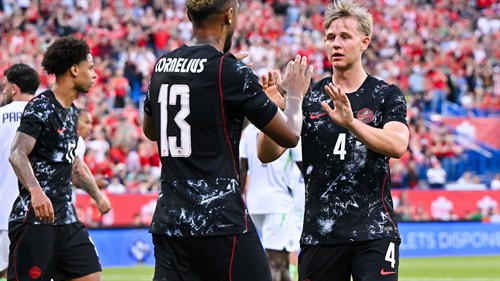
Luc de Fougerolles, Canada
WINNER: Luc de Fougerolles
Luc de Fougerolles impressed as an 18-year-old against Uruguay at the Copa América two summers ago. Now 20, he has put himself in a position to start Canada’s World Cup opener in Toronto.
That is no small leap.
De Fougerolles first broke into the Canadian setup while still playing in Fulham’s academy, then pushed for a loan last summer in search of regular professional minutes. He found them at FCV Dender in Belgium, and the growth since then has been clear.
With Moïse Bombito not as far along in his broken leg recovery as Canada had hoped, de Fougerolles played a combined 150 minutes across the two friendlies. The Ireland match was his first full 90-minute performance since March 1, but he looked more than ready for the assignment.
Against Ireland, he handled Troy Parrott and a physical Irish attack with real composure. He was calm in duels, sharp with his positioning and willing to step into midfield when the game called for it, exactly the kind of aggression Marsch wants from his center backs.
He is not the quickest defender, but he reads danger well. On one Ireland break, he took the perfect angle to cut off Parrott and kill a promising attack before it turned into something more serious.
On the ball, de Fougerolles has the vision of a creative midfielder in a center back’s body. He is comfortable taking an extra touch, carrying into space and threading passes through pressure. At other times, he shields the ball with the calm of a much more experienced defender.
“When I'm on the ball, I’m kind of just looking for cues when I'm stepping towards someone,” he told GOAL. “I'm kind of trying to free up a man next to him, and if they anticipate that I'm going to maybe play it to that man, then maybe I'll keep going.
“The season was really good to actually play games and get in the situation, because when you see scenarios and things like that, then you've been there before, and it's easier to kind of problem solve on the pitch.”
Canada needed someone to emerge in central defense before the World Cup. De Fougerolles may have done more than that. He may have forced his way into the XI.
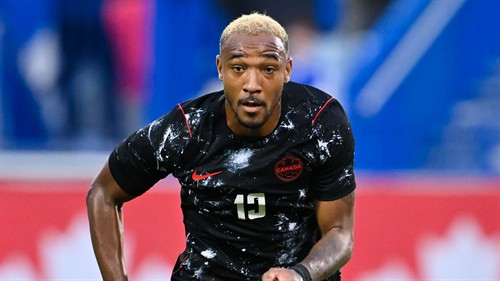
Derek Cornelius, Canada
LOSER: Derek Cornelius
De Fougerolles’ rise also makes Derek Cornelius’ form more complicated.
The Rangers center back played the full 90 minutes against Ireland, his first complete match since Nov. 2 and just his fourth appearance of 2026, all with Canada. That lack of regular club minutes showed.
Cornelius’ loan spell at Rangers has not gone to plan, and the lack of rhythm has started to affect some of the routine parts of his game. Against Uzbekistan, he collided with Bombito while tracking a long ball over the top, allowing Eldor Shomurodov a clear chance. Against Ireland, he had several small giveaways that could have become more costly against a sharper opponent.
There is still plenty to like. Cornelius remains dominant in the air, dangerous on set pieces, and useful as a direct free-kick option. Marsch clearly trusts him, and he still looks likely to start the opener beside either Bombito or de Fougerolles.
But these were not reassuring performances. If Bombito is fully fit, and if de Fougerolles continues on this trajectory, Canada may eventually have a different first-choice pairing at center back.
For now, Cornelius’ biggest battle is match sharpness. Canada need him to find it quickly.
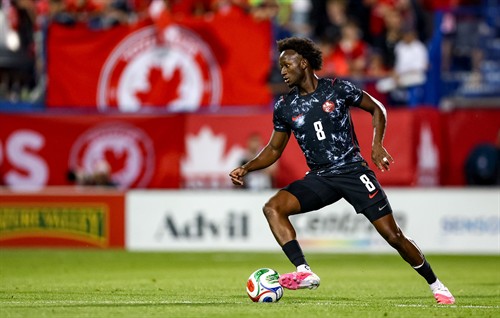
Ismael Kone, Canada
WINNER: Ismaël Koné
Ismaël Koné has long been one of the most intriguing players in the Canadian pool. He has also been one of the hardest to pin down.
Marsch has always believed in the midfielder’s ceiling, and against Ireland, Koné offered a glimpse of exactly why. He was fluid, elusive and progressive on the ball, while also bringing bite in defensive moments.
Playing in his hometown, the Montréal native looked comfortable and confident. He finished with a game-high 90 touches and completed 70 of his 76 passes. He also unleashed a long-range effort off a set-piece look, adding another wrinkle to a role he has also developed at Sassuolo.
“He was winning duels, he's winning headers, he's picking up loose balls, with the ball he's driving and finding actions,” Marsch said after the Ireland match, having been more critical of Koné’s performance against Uzbekistan.
“This, tonight, was my vision from the beginning for him, as an intensive player that also has a gift of just moving around with the ball that teams can't really match-plan for, right? He's an X-factor for us.”
That last phrase matters. Canada do not have many players who can change the rhythm of a match from midfield. Koné can. If he plays like this at the World Cup, he gives Marsch something Canada badly need: unpredictability through the middle.
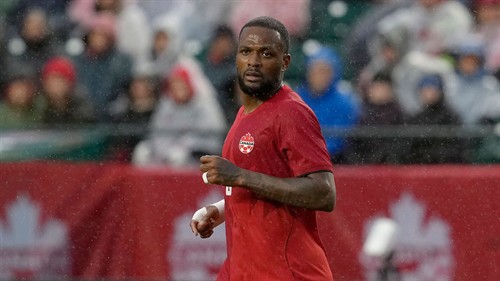
Cyle Larin, Canada
LOSER: Cyle Larin
Before the Ireland match, Cyle Larin’s club future became clearer, with Southampton completing his permanent transfer from RCD Mallorca after a productive loan spell in which he scored eight goals.
It looked like the old Larin might be back. Canada’s second all-time leading scorer entered camp with momentum.
Then the friendlies happened.
Larin started both matches and failed to end a national-team goal drought that has now reached 14 games, dating back to 2024. He had one clear chance across the two friendlies, a sharp-angle effort against Ireland that Mark Travers turned aside without much trouble. Beyond that, he offered very little direct threat.
To be fair, none of Canada’s strikers scored in the friendlies. Jonathan David’s most recent Canada goals were a pair of penalties against Iceland in March. But Larin’s struggles stood out because he looked disconnected from his attacking partners and did not consistently provide the penalty-box presence Canada needed.
He was also involved in the high-boot decision that led to Ireland’s penalty, and the rebound goal that ultimately cost Canada the win.
The goalscoring concern is real. Canada are creating moments, but not enough clean ones. And when they do arrive, the finishing has not been sharp enough.
For now, Larin still appears likely to start the World Cup opener alongside David, ahead of Tani Oluwaseyi and Promise David. But how long is the leash? At this stage, it may not be very long.
The friendlies are over. The margin for patience is about to get much smaller.

- Daily
- Weekly
- Monthly



Your Say