'Hurts to this day' - USMNT players, coaches explain pain of WC cuts
For every USMNT player who gets the World Cup call, another is left to process the one that never comes. GOAL spoke to players and coaches about the pain of missing out, and why it can linger for years.
Posted Monday, May 25, 2026 by goal
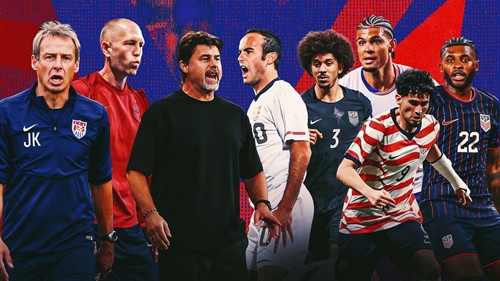
Missing a WC GFX
For every USMNT player who gets the World Cup call, another is left to process the one that never comes. GOAL spoke to players and coaches about the pain of missing out, and why it can linger for years.
On Friday, 26 U.S. Men's National Team players received the call that changes everything: They were going to the 2026 World Cup. For them, it was elation. Playing in a World Cup is the dream; playing in one at home is something even fewer ever get to experience.
But for every player who got that call, others were left waiting for one that never came. Diego Luna was reportedly among the most high-profile omissions from the final squad, a reminder that there was only so much room on the plane and that some deserving players were always going to be left behind. Mauricio Pochettino, like every World Cup manager, had decisions to make. At this level, though, those decisions do more than shape a roster. They create a kind of heartbreak that can linger for a lifetime.
Countless players have felt that pain over the years. American soccer’s World Cup history is full of brutal selection calls, controversial coaching decisions, and cruelly timed injuries. One way or another, players are always left behind. And while their teammates get to write their own chapters on the world’s biggest stage, those who miss out are left to process what might have been.
So what is that actually like? How do players handle the bad news? How do coaches deliver it? No two stories are the same, but all of them reveal the same truth: missing a World Cup is not just a career setback. It is a wound that can stay with a player forever.
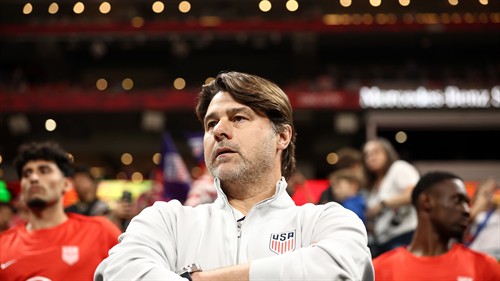
Mauricio Pochettino
Pochettino's process
Pochettino's decision on how to inform players was, in his eyes, an easy one, and it was colored by his own experiences in the players' shoes. He'd been on both sides. He knows what that joy felt like. More importantly, he also knows what that despair does, too.
"In 98 and 94, I was on the radar, but they didn't call me," Pochettino said last fall. "In 2002, in Korea and Japan, I was in the final team. For me, that is how we settled the principle and the communication."
Even as far back as 2025, Pochettino had laid out exactly how cuts would be made. He would personally contact the 26 players in the mix, and that would be that. The others would find out in different ways.
Part of that decision was purely based on logistics. Throughout his time as USMNT coach, Pochettino worked with dozens of players, and there were a few dozen that he didn't work with that would be holding out hope, too. Even if he just called those on the provisional roster that didn't make the team, that would be 30 additional phone calls to make while bearing bad news.
The other side of it was the human element. Through his own experiences, Pochettino learned that, in that moment of disappointment, the last thing a player wants to do is talk about it. Some are heartbroken, others are livid - none are in a particularly talkative mood. If the time comes when they are, Pochettino says players know how to reach him and his staff. If they never want to speak to him again, he understands that, too. This decision is a human one, and players will react in human ways.
"I was on this side, so I know," he said. "When you are not on the final roster, I am going to call the player and say what? Why would you call me with bad news? If they feel the necessity to call me, for sure, I'm very open to explaining why."
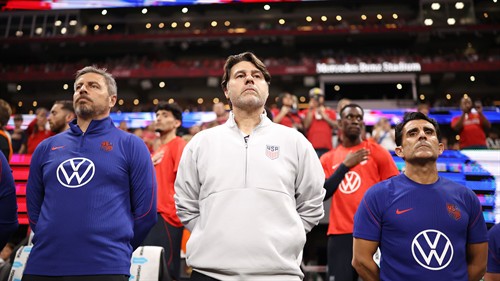
Pochettino also made the decision to make these calls early, well ahead of the June 1 deadline. There would be no big training camp full of competition days for the World Cup. The 26 that arrived in Atlanta ahead of the tournament would, barring injury, be the 26. Pochettino says he didn't want to string anyone along who, ultimately, wasn't going to make it.
"From the beginning, if you say, 'OK, that is the 26', that is a shock," Pochettino said in the fall, "But this is okay. You accept it after. To be involved and then to go home? I think it's more cruel in that situation...I think, for me, it's easier to call more players than 26, but I need to think of the human being and decide not to be cruel, because when you train, you train. If you train and you go home, it’s tough."
Not every coach takes that approach. Some give players until the last possible moment to make their case via a pre-World Cup camp. That was former USMNT manager Jurgen Klinsmann's approach as he, too, tried to approach this process in the most humane way possible.
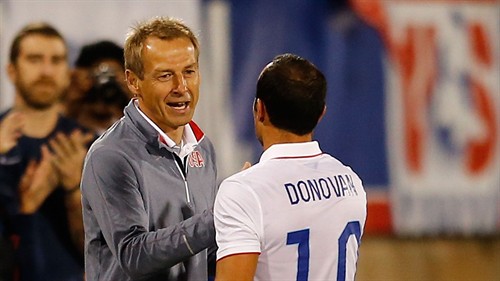
Jurgen Klinsmann Landon Donovan USA 10102014
'It really hurts'
Klinsmann himself never suffered that pre-World Cup disappointment. He won the 1990 World Cup before playing again in 1994 and 1998. He does remember seeing friends get the bad news, though. Guido Buchwald, one of his closest friends in Stuttgart, missed out in 1986 and even now, 40 years later, Klinsmann describes it as devastating.
As a coach, he's personally provided the devastating news twice. All these years later, it still haunts him that he had to be the one who created that level of heartbreak.
"You see that as a player: how difficult that is to swallow a situation like that," Klinsmann tells GOAL. "Then obviously, when you become a manager, a coach, you have to give that message yourself to some players, like I had to do. I had to do it with Germany and with the U.S.
"With the U.S., it was seven players that I had to tell at Stanford that they're not part of the final 23. With Germany, it was four players that we had to cut."
Klinsmann, of course, was at the center of the most infamous World Cup roster decision in USMNT history. His decision to leave Landon Donovan off the 2014 roster was extremely controversial at the time and, 12 years later, it remains fiercely debated, to say the least. Unlike Pochettino, Klinsmann brought 30-players to a pre-World Cup before heading to Brazil. Seven were given the bad news. Donovan was joined by Clarence Goodson, Maurice Edu, Brad Evans, Terrence Boyd, Joe Corona, and Michael Parkhurst as the last cuts. They were told in person.
Now 12 years on, Klinsmann says that particular day remains one of the hardest of his career. It wasn't just Donovan he had to let down; it was six others, all with families, hopes, and dreams of playing in the World Cup. He does not regret any of it, and, in particular, he doesn't regret that he did it in person and face-to-face with those on the wrong side of it.
"Every coach does it differently," he says, "And every player handles it differently. Maybe for a player, it is better to just get the very dry message, 'You're not on it', but I just felt, for me personally, it's important to talk to the player, even if they maybe, after 10 seconds, don't listen anymore because they are devastated. Your first message is, 'You are not on the roster', but for me, it was important to have that conversation. Whether it's shorter or longer, that depends on the player, basically, and how he takes it.
"You have to deliver a message that is negative, highly negative, for the player, and it hurts. It really hurts. I remember I was exhausted myself after those talks. I needed a bit of a break. If you were a player yourself, you never want to hear that decision of a coach."
As Klinsmann says, every player handles that moment differently. It's deeply personal and, for those who have gone through it, it sticks with you.
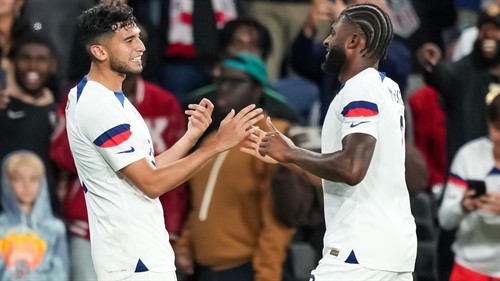
Ricardo Pepi Mark McKenzie USMNT 2023
Getting the bad news
When Zack Steffen got off his call from Gregg Berhalter, the first thing he did was pray. After being told he wasn't going to Qatar for the 2022 World Cup, there was no sense of understanding and, in truth, no real hope, in that moment, that it was for the best.
"It's really tough, to be honest," he told GOAL in 2024. "After being the No. 1 for however long, and then some COVID and some injuries and all that ... but then I thought I was back playing well, and still didn't get picked...Nobody wants to get rejected. Everybody wants to be part of something, and I want to be part of the national team. I want to be part of winning teams. So, yeah, it f*cking hurt, and it still hurts to this day."
Steffen wasn't the only one to get that bad news. Multiple players who felt they were key to the 2022 World Cup cycle ultimately didn't end up going to Qatar. Berhalter, ultimately, couldn't take everyone. That didn't make those left off feel any better.
For some, though, the snub became something to carry rather than something to end their journey. That was Mark McKenzie's approach, at least. He was 23 when he got the bad news. Now 27, McKenzie has reportedly made this summer's squad, turning one of the most painful moments of his career into part of the path back.
"I think there's also a line where that competitive edge can drive you too far," McKenzie told GOAL in the fall of his 2022 snub, "You become so encompassed with this one idea, with this one concept, that you lose sight of who you are and you lose your identity. Missing out on the 22 World Cup? It ripped me apart, bro. It was gutwrenching because I was so close. When you get that call that you're not going, that you weren't selected, it's a punch to the stomach.
"It's an important feeling to have, I think, because it puts everything in perspective in life. Okay, maybe I put too much onus on this, so much that I lost who I was, lost focus on being present, lost focus on the small areas of my game or my life that I need to improve."
McKenzie isn't the only 2022 cut to make their way back for 2026. Ricardo Pepi, famously, was left off that squad despite leading the line all through qualifying, while Malik Tillman was a near miss after starting to break through ahead of the tournament. All three have bounced back after that early-career heartbreak.
Not everyone gets another opportunity, though. Paul Arriola never really got that chance. Now 31, the Seattle Sounders winger played just two games after being one of the final few cuts in 2022.
"I remember Gregg calling me into his office real quick as I was grabbing my stuff," Arriola told GOAL in 2025, "And I wasn't even thinking that he was going to tell me that I wasn't going to go. He just told me I was on the outside looking in and I was in shock. I didn't ask questions. He said he just didn't have a spot for me. All I could do was stay quiet. He gave me a hug and said he was sorry, but I just kind of left it. I called him back a few days later and went through the process, and I didn't really understand how I wasn't part of the team after everything I'd been through over the four years with him.
"It definitely hurt a lot. I cried at home. I remember Cristian Roldan telling me, after the World Cup, that he cried more when he found out I didn't make the team than when Gregg called him and told him he did. It does make you feel good to have friends like that and people who understand. It's one thing for you to believe in yourself, but to have other people feel that way, too, it helps so much."
Ultimately, the exclusions of Steffen, Arriola, and McKenzie came down to a coach’s choice. Those decisions can be argued over forever because, in the end, they are subjective. Others never even get that far. Their World Cup hopes are ended before the final decision is made, by something entirely out of their control.
Chris Richards USMNT
Injury absences
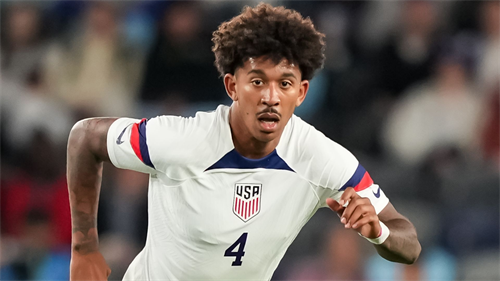
Like fellow 2026 World Cup call-ups McKenzie, Pepi and Tillman, both Chris Richards and Miles Robinson had to watch on in 2022. They weren't coach's cuts, though, and in reality, there's a legitimate chance they could have started together in Qatar.
It didn't work out that way. Robinson's Achilles injury early in 2022 ended his World Cup hopes months before Berhalter's decision. The moment he went down with that injury while playing for Atlanta United, Robinson knew what it all meant.
"It was a lot to even think of or fathom happening all at once," he told GOAL in the fall. "It was just one of those moments where you go, 'Damn.' I knew it right away. I knew I wouldn't be able to play at the World Cup, and it was just from a normal kind of motion that happens to everyone.
"Then, you have to just be like 'Okay, there's too much to be grateful for.' I can't complain. In reality, that's what I stand on. Whatever conflicts there are in my life, there's too much for me to be grateful for to let this stop me."
It didn't stop him. Same for Richards, although the Crystal Palace star's 2022 experience was very different. His injury came just a few weeks before the squads were announced. Ultimately, he wasn't declared fit in time. What hurt the most was that he was so close.
"I missed it by two weeks," Richards says. "It made it so much tougher for me because I felt like I was a part of the qualifying cycle. I did all of the hard parts. Then it got to the part where you're supposed to reap the benefits, and I got injured right before it."
Richards and Robinson, thankfully, made it back this time. Others were not as fortunate. This cycle, several USMNT players saw their World Cup hopes changed by injury before Pochettino could even make his final call. Johnny Cardoso could have pushed for a starting role before going down with Atletico Madrid. Patrick Agyemang had made his case before an Achilles injury ended his World Cup dreams. John Tolkin, Cameron Carter-Vickers and Benjamin Cremaschi were not World Cup locks, but injuries denied them the chance to make one final push.
So that leads to the big question: now what? With the decisions made and expressed to the players, what happens next? That, too, is personal.
United States v Portugal - International Friendly
Watching from afar
During the 2022 World Cup, Richards felt alone. Many of his teammates were playing in Qatar. Those that weren't were, at the very least, watching back home. Due to his injury, Richards was stuck in London rehabbing to get back following the World Cup break.
Without anyone to really watch with, Richards did the best thing he could: he went to the pub and watched with other Americans.
"It was tough and easy to root for the boys at the same time," he says. "I'm in London watching the boys kill it at the World Cup, and I was so, so happy for them, but for myself, it was lonely. Yeah, that's what it was: lonely. I didn't want anything to do with soccer. I think it was because it was a dream I always had, and it felt like it just got ripped away from me right before it. It doesn't mean I wasn't rooting for the boys, though."
Robinson felt the same way. He, too, tried his best to enjoy the moment. He particularly enjoyed the chance to be a fan of a team that he still felt part of.
"Man, I was outside watching that sh*t," he told GOAL with a laugh. "We were partying, watching, cheering on my guys. I really wanted to experience that real-life energy because that's who I am. I wasn't trying to sit back and sulk. You just want them to succeed. You want them to do well.
"At the end of the day, yeah, you're still a little bit salty that you're not a part of it, but you recognize that they're now the ones putting in the work. You're rehabbing, and they deserve it, too."
Everyone will have a different way of consuming the World Cup. Some, like Richards and Robinson, will watch on as best they can. Others will tune out, needing a break from it all before focusing. Donovan, after getting cut in 2014, took to TV, joining ESPN as a studio analyst as his way of staying involved.
There's no right answer to any of it. There's no right way to deliver the news and no right way to receive it. There's no joy in any of this, for the players that suddenly have their lives changed and the coaches tasked with changing them. For many, the hardest parts of a World Cup don't come on the field in the 90th minute of a do-or-die game; they come on a phone call or a meeting that, unfortunately, leaves a World Cup-level impact on everyone who has to suffer through one.
"It's going to be really sad to make some decisions," Pochettino said in March, "Because there are only 26, but this is football, and that is the rule that we need to set when we are here."

- Daily
- Weekly
- Monthly
Photos
More»

Arsenal's World Cup minutes give Arteta injury headache
Wednesday July 22 2026
Your Say