Inside Vancouver’s fight to keep hold of the Whitecaps
Vancouver was one of the original soccer cities in North America, and the failure to agree on a new owner for the club has fans fearing the worst
Posted Wednesday, May 20, 2026 by goal

Vancouver Whitecaps relocation story
Vancouver was one of the original soccer cities in North America, and the failure to agree on a new owner for the club has fans fearing the worst
One of the best days of Terry Dunfield’s year was when the season tickets arrived in the mail. He, his Dad, and his brother would eagerly await that letter, which contained three slips of paper, each offering a season ticket to his local team.
“We received our mail season tickets in the post. We circle the home games, and it was more than just the football. It was an afternoon,” Dunfield told GOAL.
Dunfield, who played for the MLS iteration of the Whitecaps in their inaugural season in the league, back in 2011, is Vancouver through and through. He was born there, and after a career that spanned both sides of the Atlantic, he moved back. This place is always home - and always connected to soccer.
And now, it’s under serious threat. The status of the Vancouver Whitecaps is always changing. But as of the time of writing, there is no agreement on a deal to extend their stay at BC Place - a stadium that they do not own. The team has been up for sale for nearly 18 months. An ownership group has reportedly made a concrete offer that would see the side relocate to Las Vegas - an ambition long held by MLS, and many other major American sports leagues.
It all places a significant amount of uncertainty on a team that is, undoubtedly, an integral part of the community - and the American soccer sphere at large. Soccer has existed in Vancouver, in a professional setting, for over 50 years. They were one of the first three teams in the NASL. There has been a culture around it for even longer. The high-level negotiations over ownership, stadiums, and deals will drag on. But for the fans, the threat of a community asset leaving is frighteningly real.
“If you take away that culture, you are taking away a staple of North American culture, and I think that's the alarming part, the fact that they would consider that, especially if we want to be in the North American League,” Jay DeMerit, who captained the team from 2011-2014, told GOAL.
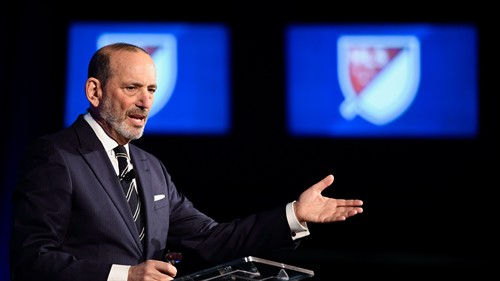
MLS Commissioner State of the League Address
A tricky situation
Relocation has loomed for a few years now. It has, in fact, been an unspoken threat for some time. MLS has made it a clear priority that all of its teams should have their own soccer-specific stadiums. Commissioner Don Garber called for it outright at his State of the League address in 2025.
"We’re in the business of delivering for the people that really, really want to have an MLS team,” Garber said at an event in Washington. “We need to wait and see if the cities and province want to do that. If they don’t, we’ll have to make some tough decisions.”
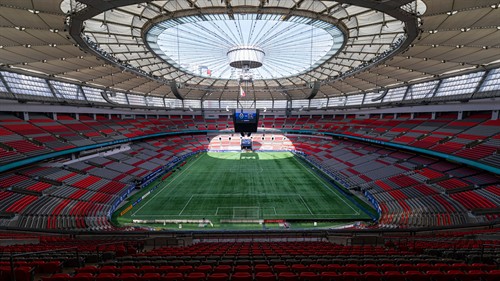
And even if Vancouver have no problem creating a raucous atmosphere in BC Place - and are on pace to finish in the top five of MLS attendance this year - it remains a multi-use ground. Yet for the fans, it’s about far more than the cavernous stadium they call home. Various iterations of different Whitecaps clubs have existed for years, playing in different venues. This is, instead, about the football - and what it means to the people there.
Fan protests and sports are usually pretty simple. It happens, in some form, every week in global soccer: ultras complaining about teams, fans protesting ticket prices. Owners get the blame, the team gets booed, and most people move on. But the threat of relocation is, generally, a distinctly North American concept.
Vancouver’s ownership situation is particularly tricky. It’s a question of estate planning. Majority owners Greg Kerfoot and Steve Luczo are in their 60s. But it’s also a financial issue. The owners want to sell, in effect, because it’s no longer financially viable for them to keep running a team. They bought the club in 2002 for $30 million and paid an additional expansion fee of roughly double that in 2011. NBA legend Steve Nash also invested in the club in 2008.
But this is a business, and reports indicate that the owners have lost somewhere in the region of $400 million since joining MLS in 2011. This season, projected losses are up to nearly $50m. The Whitecaps are dead last in the league in revenue, with a reported shortfall of $40m each season to the average MLS club.
It makes sense, then, to cut ties. But any new owner would have to make massive financial concessions to buy the club. The current ownership group signed a memorandum of understanding over a new ground at Hastings Park, but progress has been limited.
For any owner, a new stadium - or at least a very good plan for one - has to be guaranteed. For nearly a year, Vancouver have received offers to buy the team in various forms. Not a single one has generated serious traction, according to club CEO and Sporting Director Axel Schuster. Solutions are sparse. Meanwhile, MLS has fielded a concrete offer from an ownership group that would move the team to Las Vegas.
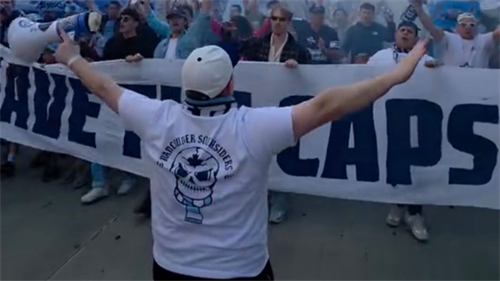
Vancouver Save the Caps
'Hoping it would go away'
So, how do the fans react to this one? The answer, of course, is protest. The #SaveTheCaps movement started in earnest in April, but the sentiment had been bubbling away for a while before then.
“A lot of people were just kind of hoping it would go away,” Ciaran Nicoll, President of the Vancouver Southsiders supporters’ group, told GOAL.
The good news for Nicoll and Co? There’s immense support from all angles. As of Tuesday, nearly 12,000 have signed an online petition to keep the team in Canada. But the real value is in the visuals. Save the Caps signs have cropped up all over BC Place. Other clubs around the league have also made an effort. This thing has gone nationwide.
“It's clearly caused a stir. So clearly, what we wanted to happen has happened in this kind of first stage of things,” Nicoll said.
Nicoll, who emigrated from Ireland nearly a decade ago, noticed that things gained traction pretty quickly. A march to the match in April drew thousands of protesters. He had requests from foreign media before that. This was a story, and he realized the Southsiders needed to get active. Since then, it’s been a barrage of interviews, organizing, and social media. This will be a slow burn, he admitted. But right now, he is cautiously optimistic.
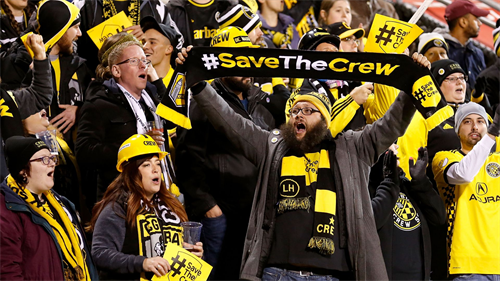
Columbus Crew fans
'History doesn't repeat itself, but it certainly rhymes'
There’s precedent, too. Morgan Hughes was going to quit Supporters’ Group duties nearly a decade ago. But he found himself dragged into the national spotlight. The ownership situation in Columbus was one of the most complicated ones. Their owner, Anthony Precourt, wanted to move the team to Austin. MLS agreed, citing that the Crew hadn’t made enough inroads in the community. Hughes, along with tens of thousands worldwide, led the #SaveTheCrew movement that kept the side in Ohio - with new ownership.
When Vancouver’s battle began, he was among the first calls.
“The minute it started, people were tagging me in stuff. There’s like a bat signal with my face on it,” Hughes joked.
It’s easy to see why. Hughes is a self-described “loud, obnoxious, self-righteous asshole” who helped spearhead a successful movement. And even if there are some clear differences between Columbus’ plight and Vancouver’s - not least a national border - Hughes was able to identify some clear parallels.
“You know that famous saying, ‘history doesn't repeat itself, but it certainly rhymes.’ We taught the league a pretty big f*cking lesson in 2018. I wonder if part of the thing that they learned from that is, okay, well, first of all, don't f*ck with Columbus,” Hughes said. “Second of all, part of the extortion racket that is professional sports teams in North America, in this case, getting public money for private enterprise, is that we can threaten this a little bit.”
He and Nicoll engaged in some conversations early on. And Hughes was full of advice.
“When I talked to them, I thought, ‘this is us in the first couple of days. It’s still a Supporters’ group.’ As time goes on, and you embrace solutions that are required by the problem, you bring new people on, and it isn't a supporter group anymore,” Hughes said.
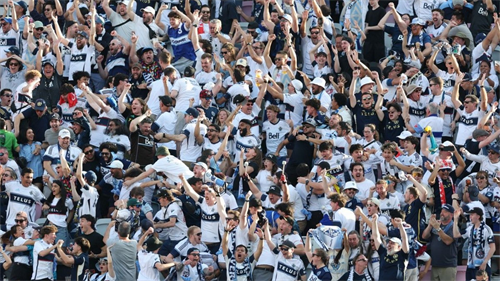
Vancouver Whitecaps fans
'We're up against some pretty powerful people'
The best pointer Hughes offered? Put people in the right places and the right things tend to happen.
“If you're good at painting banners, you may get art projects done, but like, how do you talk to local leaders in the business community with a paintbrush? You can, but I think you've got to put the paintbrush down,” he said.
Nicoll admitted that his advice has been invaluable so far.
“The main thing was kind of like how to stay agile. We're up against some pretty powerful people, but they need to go through different channels to get approval for all this sort of stuff. I can send a message to my guys and change the message on a dime,” Nicoll said.
Perhaps most importantly, though, Nordecke, the Crew’s Supporters’ Group, has supported Vancouver in full. That’s because they know, fundamentally, how this all feels.
“The betrayal, and the sorrow, and the feeling of loss was palpable, and it was powerful, and I would say that's what really inspired the people from Save the Crew who came together to get organized,” Collin Hill, Communications Director of Nordecke, told GOAL.
Mark Carney
'When you take that culture away, it hurts the game'
Vancouver has never quite fit the easy American stereotype of a Canadian sports city. It isn’t defined by snowbanks and hockey mythology alone - even if the Canucks remain central to its sporting identity, they are still chasing their first Stanley Cup - and its basketball history still carries a what-if quality: the Grizzlies arrived in 1995, stumbled through six losing seasons, struggled with attendance, finances and the weak Canadian dollar, and were moved to Memphis in 2001 after the NBA approved the relocation.That move, though, was hardly a clean cure-all: in a recent anonymous player poll from The Athletic, 35.8 percent of 120 NBA players said Memphis would be the first team on their no-trade list, the highest share of any franchise. If nothing else, the split between Vancouver and the Grizzlies is a reminder that market fit is complicated. Basketball came and went. Soccer reemerged, found firmer ground, and grew. Now, this is a place that loves its soccer.
“We understand that the pillars of U.S. soccer have been built on business and money and ownership, but at the end of the day, it's still the sport, and the sport is built around culture. When you take that culture away, it hurts the game,” DeMerit said.
It’s something that Nicoll found when he moved to the city.
“It's as big compared to the city as any MLS team. You would struggle to find a team that means more to the city than the Whitecaps do to Vancouver,” he said.
And for those who have played in the league and covered the game, it also feels like a part of the fabric of MLS.
“You want to see Vancouver stay in Vancouver,” Former MLS star and current Fox broadcaster Stu Holden said to GOAL. “I grew up in Scotland, I supported my local team, and that becomes tribalistic, that becomes religion, that's something you pass down through your families that you have shared experiences, and there's nothing like that, and we don't have enough history yet of this game in this country.”
The noise expands beyond supporters, players, and analysts. Mayor Ken Sim weighed in on April 28.
“From improving the game day revenue model to exploring long-term stadium opportunities, partners are working together to build something that reflects the ambition of Vancouver and our region. The Whitecaps belong in Vancouver,” he said.
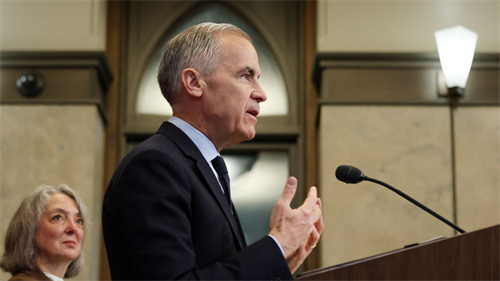
Even Prime Minister Mark Carney made his thoughts clear.
“In terms of the Whitecaps specifically, I’m not personally involved in that,” Carney said. “I would obviously like them to stay.”
MLS, for their part, acknowledged that they would like a solution for the team to stay - as long as they find sustainable ownership. They affirmed as such in a statement last week.
“All parties have committed to continuing to work actively towards improving the economics of soccer in Vancouver. We are encouraged by this shared intent,” read a release.
Still, a “special committee” of owners met this month to discuss Vancouver’s relocation, according to multiple reports. GOAL contacted MLS for clarity on the league’s broader relocation process, but had not received a response at the time of publication.
Jose Bautista
'Could they create their own culture?'
And then we have Las Vegas. There has been a movement, of late, to push major sports teams to Sin City in recent years. The Golden Knights entered the NHL in 2017. The Aces of the WNBA left San Antonio for the Strip in 2019. The Raiders left Oakland in 2020. The Athletics will move in 2028. The NBA has also publicly announced that the city is under consideration for an expansion franchise (The Aces and Golden Knights are routinely among the best-attended teams in their respective leagues).
There is already something of a soccer culture in the city. The Las Vegas Lights were founded in 2017 and compete in the USL Championship. They have struggled, however, to fill seats, and averaged just 2,803 fans per game last year - in a stadium that seats nearly 10,000. Attendance has dropped every year since 2019.
The Lights didn’t offer a comment when contacted by GOAL. There is logic here. Vegas is the fifth most-visited city in the U.S. by international travelers. That could lend itself to soccer. Still, some have questioned the city’s readiness for a team.
“Vegas isn't exactly like a thriving community of people that are just demanding Major League Soccer. I'm not saying that the sports fans aren't great there; they certainly are. I've never seen a petition circulated, rather. I don't care if there is. And if there is, I hope it's not at the expense of a very cool, legitimate, and worthy community in Vancouver,” Hughes said.
DeMerit, too, was skeptical - even if he backed any potential team to build over time.
“Vegas isn't a soccer culture, so you're gonna have to start again. Could they create their own culture? Probably. Do they have enough people to fill the stadiums? Probably. But now they got to start from a cloth that's blank, and a canvas has never been painted,” DeMerit said.
And even if that were to happen, Nicoll insisted that very few Whitecaps fans would stick with the team.
“People support their clubs in different ways, and it's a lot more about being there, right there. There won't be many people who will do that,” he said.
Vancouver Whitecaps FC v Sporting Kansas City
'My heart tells me it’s not going to happen in the end'
There is talk of local ownership rallying together to work with the province, federal government, City of Vancouver, three First Nations and BC Place to find a solution. New updates seem to circulate every week. No solution seems imminent, while the threat of Vegas looms.
Meanwhile, the team is performing admirably on the pitch. They were one win away from lifting MLS Cup last year. This season, they are top of the Western Conference, without really playing their best football. Multiple players have made it clear that they are eager for the team to stay.
"The way the support has grown, 27,000 fans in the stands, it shows what this club means to the city and to the people," striker Brian White said after a sold-out fixture in late April.
And for Dunfield, who was there, by his mailbox, every year, there is no way they should be able to leave. The good news? There are tens of thousands of him that feel the same.
“My heart tells me it’s not going to happen in the end,” Nicoll concluded.

- Daily
- Weekly
- Monthly
Photos
More»

Arsenal's World Cup minutes give Arteta injury headache
Wednesday July 22 2026
Your Say