The Rondo: Can the U.S. youth soccer system be fixed?
The American youth soccer system is full of talent but lacking in organization, and GOAL US writers offer their thoughts
Posted Wednesday, April 22, 2026 by goal

U.S. youth soccer
The American youth soccer system is full of talent but lacking in organization, and GOAL's writers offer their thoughts on what needs to change.
Let’s rebuild American men’s youth soccer. It’s easy, right? All you need to do is take a look at a broken system, get everyone to remove self-interest, make it affordable - or ideally free - and the USMNT will be lifting the World Cup trophy by 2034. Simple.
That is beyond a pipe dream. But, there absolutely have to be some honest conversations about the state of youth soccer in the U.S. Developing good players is not the silver bullet to national team success. But it is a good way of improving, and also turning a profit, which can then be reinvested.
Getting everyone to understand that, though, is no easy feat. A lot of people have a lot of money invested in this thing, and there’s no standardization into how much is fair to spend - or demand - from either systems or parents. Have a headache yet?
GOAL doesn’t have any real answers. But their writers do have a few suggestions. And they break down where we are and where things might improve in another edition of… The Rondo.
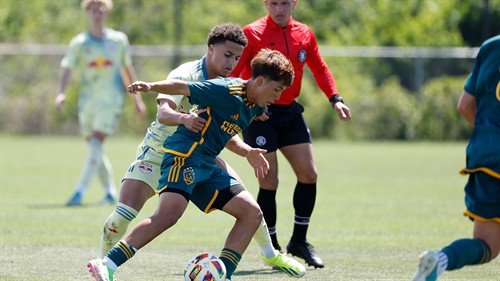
LA Galaxy GA Cup
How do you feel about the state of youth soccer in America?
Tom Hindle: It feels like we're in need of a sea change. There's an overreliance on small victories - good players, GA Cup wins, youth World Cup runs - rather than a real view of the whole thing. Sure, there are good coaches. Yes, individual clubs - professional and otherwise - are doing better with the resources they have. And of course, soccer is a business. But until the sport becomes self-sustaining in the U.S., it sort of feels like a bad model operating on the margins rather than an ambitious setup ready to flourish.
Ryan Tolmich: Getting better, but not there yet. Realistically, top-end youth development is still in its infancy and, despite what outsiders may say, applying what other countries do to American soccer isn't a like-for-like idea. This country is too big and too spread out to make this easy, which is why it'll take years and lots of money to really get something that's close to right. It's closer than it was a decade ago, but still pretty far off the ideal setup.
Alex Labidou: It feels more structured on the women’s side than the men’s, but both are still pretty fragmented. That’s partly the reality of a country this big - developing in Boston versus San Diego can be completely different experiences. The next step is better alignment. If U.S. Soccer can connect those pathways, especially on the men’s side, the talent is there. It’s about whether the system can catch up. Also, the cost, overall, is high for most pay-to-play programs. That needs to change.
Celia Balf: I don't feel very good about it. As someone who's been on all sides of youth soccer, as a coach, a content lead for a youth sports app, a player and now a mom, it's rooted in too much money, exploitation and not enough good leaders.
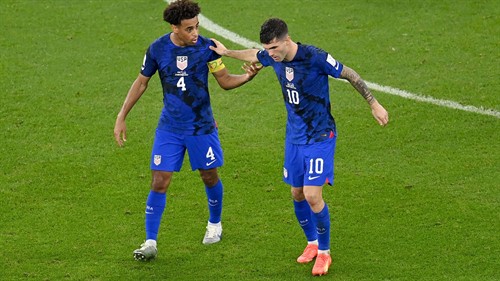
IR Iran v USA: Group B - FIFA World Cup Qatar 2022
Where does the U.S. rank in the world in developing men's talent?
TH: Relative to what it has in terms of talent, money, and population size? Frightfully low. The misuse of the cash in this system is pretty staggering. But in terms of using what's available, somewhere in the 20-30 range. Europe's big five leagues dominate it. Portugal, Austria, Switzerland, Denmark, and Sweden are all probably better. Throw in a handful of African countries, Japan, South Korea, Argentina, Brazil, Colombia, Ecuador, and Uruguay, and, yes, Mexico, and the U.S. is somewhere in that conversation.
RT: The narrative is that it's low, but realistically, how many countries out there would love to produce the talent that American soccer does? At the very least, the U.S. is in the top 20, which is a very realistic place to be, given how little was actually invested in this area until just a few years ago. That investment is beginning, and we won't really see the result of it for a while, but even without it, the U.S. can still power through some talented players, just to the size and scope of sports in this country.
AL: It is interesting because, for all of the criticisms the U.S. gets, the women's side is fantastic, and the men's side has produced some strong prospects for both the USMNT and other teams around the world. Giuseppe Rossi, Neven Subotić, Jonathan David, and Leipzig's breakout star Yan Diomande all have ties or were developed, in part, here. The larger question is how do American soccer clubs find players like Jay DeMerit, who slipped through the cracks and had a long journey to pro football, earlier?
CB: Low. There's too much money, fluff and not a clear pathway. Youth sports should be centered around fun, exposure to sports, healthy activity and social skills and I don't see that in the U.S., I see the opposite.

Mikey Varas
What's the key to improving it?
TH: Ideally? Getting everyone in a room and on the same page. First of all, it absolutely has to be centralized. with key actors all agreeing to play each other week in, week out. MLS and, ideally, USL academies should have catchment areas where they can absorb talent from local clubs (not unlike the European model). Sure, there should be some sort of system where MLS academies all play in a tournament. But until then, there should be a natural feeder system from elite club into MLS. Does that mean some mid-level clubs die out? Maybe. But it also means MLS academies will have to invest more.
RT: Time and effort. Better coaching and better pipelines are needed, but they also won't provide immediate results. It takes time for these processes to bear fruit, and stakeholders can't be afraid of dedicating that time to get things right. We are just now seeing the first crop of players that spent their entire youth careers in academies and look how far ahead they are compared to their predecessors. Now, let's see what happens as those academies improve.
AL: You keep reading about it, but less focus on results and more on comfort and skill. Who cares if your U8 team is scoring enough? Are they passing effectively and enjoying receiving and moving around without the ball? That's key. You compare the U.S. system to places like Holland or Germany, and the approaches are vastly different. The U.S. doesn't need to be a copycat, but considering their vast resources, they should be finding ways to be better maximize the available talent in each age group.
CB: Emphasis on fun, removal of parental pressure, trained coaches and community programing and more accessibility.

SF Glens 2
Does the pay-to-play system need to be abolished?
TH: Not necessarily. Soccer cannot be free for everyone. That is literally impossible. This thing perhaps should cost a few bucks for those that can afford it. But the notion of $7000 for one season, for decent level club soccer, for example, is ridiculous. Pay up for the posh stuff like elite one-on-one coaching, not the standard level that most of the rest of the world gets for way less.
RT: Thinking it will be is fantasy land. Regardless of how you feel about it, Pay to Play is the reality of soccer in this country, and it would take, at best, decades to change that fact. This isn't a country with hundreds of years of infrastructure and systems and, even if you wanted that, it wouldn't happen overnight. Finances are also a key part of American youth sports, in general, and that's only becoming more true as the years go on. It's one of the things you just have to accept and navigate by finding ways around it that allow the best prospects to be seen.
AL: Pay-to-play exists across all sports in the U.S.. For example, NBA star Steph Curry had pay-to-play his whole life thanks to Dell Curry, a former NBA star, being his dad. But the key difference is AAU ball is almost cost free for players who are talented enough to make the cut. Soccer still doesn't have that yet and it needs to. If MLS and/or the USL find a way to make their access to their youth programs as affordable as can be, both leagues could stand to greatly benefit.
CB: Yes.

Borussia Dortmund v 1. FC Union Berlin - Bundesliga
What would be a true sign of progress in the U.S.'s development of youth talent?
TH: Young kids making an impact at all levels of club football around the world. South America is probably a pretty good example in terms of exports. Those lads are playing for good teams around the world from a young age. You don’t need a singular 20 year old in a Dortmund team. Show us a bunch of 16-19-year-olds playing everywhere, from Brighton, to Scunthorpe to FC Copenhagen. That’s when you’ve properly made it. Basically, you want U.S. young talent to be good, good, and too profitable for the more successful clubs to ignore.
National team success would be cool, but how many of those lads are from U.S. systems? Everyone is into dual-national recruitment. Football teams should be diverse. But if you’re being carried on World Cup runs by lads with English passports, it’s not loads to shout about.
RT: There's no perfect measuring stick. Is it World Cup success? Maybe, but there's so much luck in that. Is it the raising of standard in MLS? It could be, but realistically, half of the outside world wouldn't be impressed anyway because it's not Europe or South America. Continental progress, transfer fees, youth tournament wins - all part of this, too. Maybe it's just a collective of all of the above because just one won't quite be enough.
AL: Here is a wild stat. There have only been eight American strikers in the Premier League's history. Across Europe, that stat is likely the same. Furthermore, there has never been a U.S.-born player to suit up for Real Madrid or Barcelona, and there have been about a handful who have consistently featured for Manchester United, Chelsea, Bayern Munich or PSG. These are the biggest clubs in the world. If the U.S. can have a more consistent presence there, that would be a sign of progress.
CB: U.S. Youth Soccer National Team successes, closer involvement of Under-20, Under-23 and senior teams through camps, training sessions and coaching conventions.
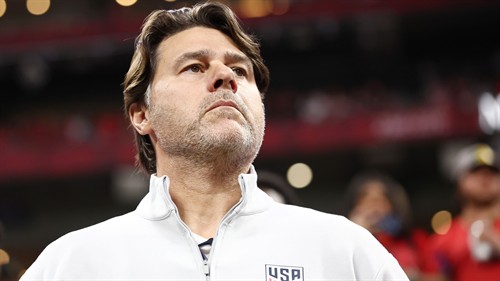
United States v Portugal - International Friendly
Is it the key to winning a World Cup?
TH: Nope. It's about way more than developing a decent player pool. But having good talent at your disposal certainly takes you closer to the main prize.
RT: Absolutely. To win a World Cup, you need multiple world-class talents. Right now, the U.S. does not have that. This country has shown it can develop top-level players, but there's a gap between that and Ballon d'Or contenders. Any team wanting to win the World Cup needs multiple talents at that level and the U.S. isn't there yet.
AL: Mauricio Pochettino was wrong for saying it loud, but he was right: The Americans don't have anyone who would be considered a certified top-100 player in their squad. You can make an argument for Christian Pulisic or Weston McKennie, but consistency has been a challenge for both men in their careers. Having a better youth development system here is critical to changing that.
CB: It is. But, at the moment, a longterm goal won't be fixed in a year or four.

- Daily
- Weekly
- Monthly
Photos
More»
Hot pics of Brazil’s sexiest fan Gabriela Moura
Tuesday June 23 2026
Meet Colombia World Cup fan Evely Cardenas
Tuesday June 23 2026
[PICTURE SPECIAL] France 3-0 Iraq
Tuesday June 23 2026
Your Say